• Sunday 10am - 4pm
  • Monday CLOSED
  • Tuesday 10am - 6pm
  • Wednesday 10am - 6pm
  • Thursday 10am - 6pm
  • Friday 10am - 6pm
  • Saturday 10am - 5pm

5 Must-Ride Scenic Routes for Motorcycles in Indianapolis in the Fall

Posted by Dan Novit

Oct 16, 2025 10:00:00 AM

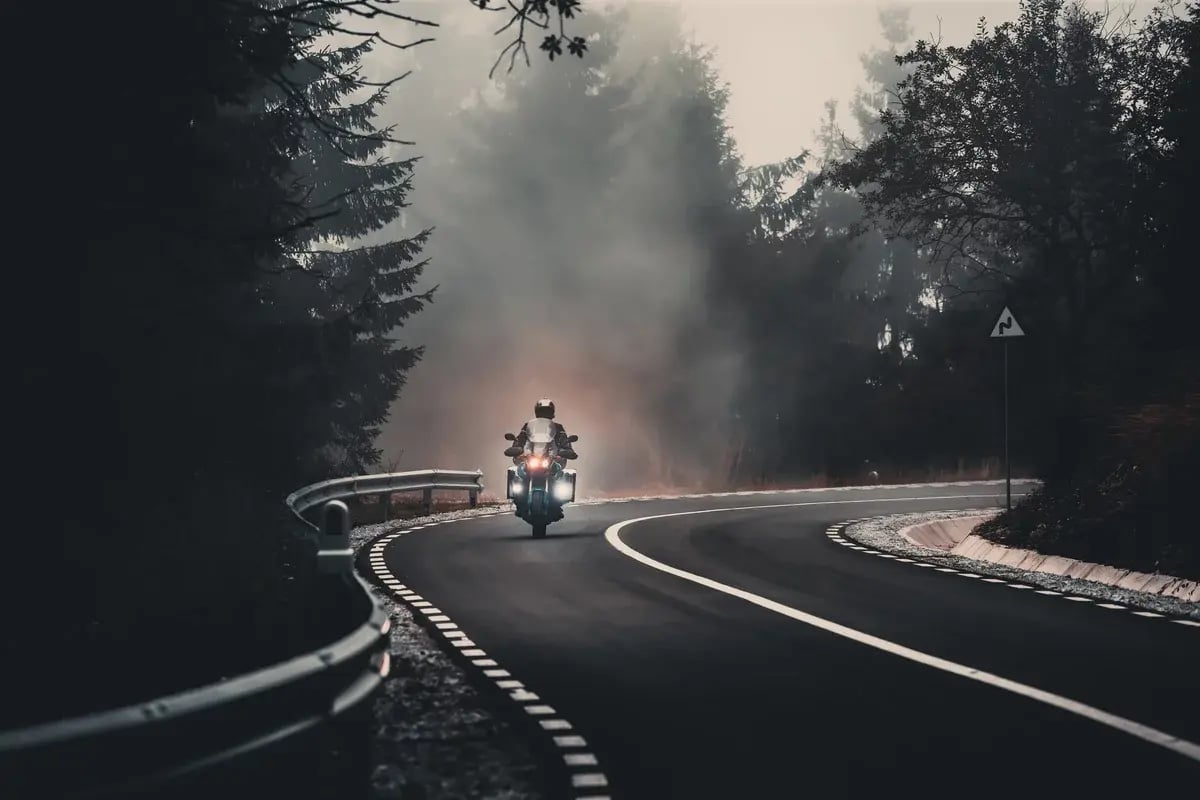
Harley Davidson motorcycles in fall setting

TL;DR

Looking for scenic routes for motorcycles near me this fall? Central Indiana delivers. Here are five must-ride routes that blend color, curves, and throttle therapy:

  • Fall Creek Road – Easy city escape with wooded views and light curves
  • Brown County Scenic Loop – Big fall color and mountain-style riding vibes
  • Morgan-Monroe State Forest – Quiet, cool, and perfect for a reset
  • Eagle Creek to Traders Point – Lakeside twisties and open-road ease
  • Indy to Madison Run – A full-day adventure with river views and small-town charm

When the leaves start to turn and the air gets that perfect fall crisp, it’s time to chase the horizon. Autumn in Indianapolis brings out the best in the Midwest’s landscape, which feels made for two wheels.

If you’ve been searching for scenic routes for motorcycles near me, you’re in the right place. We’ve rounded up our favorite fall rides around Indy. These are routes that deliver the kind of views, curves, and freedom riders live for.

1. Fall Creek Road – The Hidden Gem in the City

Tucked away on the northeast side of Indianapolis, Fall Creek Road is one of those better-than-expected motorcycle routes. It winds alongside Fall Creek and meanders through wooded stretches, quiet neighborhoods, and sections of Fort Harrison State Park. In the fall, the tree canopy pops, creating a tunnel of color that feels well beyond city limits.

This route is ideal for riders who want a laid-back cruise without the long haul. It’s close, scenic, and just curvy enough to keep things interesting, especially near Fort Ben.

Fall Creek Road is proof that you don’t have to head hours out of town to find great riding nearby. It’s the kind of ride that’s perfect for a weekday evening cruise or a quick weekend reset. For Indy riders looking for good local motorcycle routes that bring the beauty of the season, this one’s a no-brainer.

2. Brown County Scenic Loop – Indiana’s Answer to the Smokies

If you’re craving curves, elevation, and those big autumn views, the Brown County Scenic Loop delivers. This ride snakes through Indiana’s most dramatic terrain.

Begin in Nashville, Indiana, and take either SR 135 or SR 46, both of which lead to Brown County State Park. On the way, the rolling hills explode into scenic vistas with fall color around every curve.

This is a favorite among riders who appreciate a mix of technical turns and wide-open scenery. Along the way, you’ll pass through unique stops and overlooks that make it hard not to pull over. Whether you’re riding solo or on a group run, this loop feels like an escape without ever leaving the state.

The Brown County Scenic Loop easily earns a spot among the best cross-country motorcycle routes in the Midwest. It’s the kind of ride where throttle and lean become second nature and where every corner rewards you. If you’re looking for a route that gives off Smoky Mountain vibes right here in Indiana, this is it.

3. Morgan-Monroe State Forest Ride – Quiet, Cool, and Curvy

Sometimes, the best rides are the ones where the world just quiets down. And that’s exactly what you get with the Morgan-Monroe State Forest Ride.

Just south of Indy, this route follows Old State Road 37 through dense woods, soft hills, and miles of uninterrupted pavement. It’s not the longest stretch, but what it lacks in distance, it makes up for in atmosphere. In the fall, the air is crisp, the roads are dry, and the forest glows with deep reds and golden yellows. This is where throttle meets therapy.

The curves here are smooth and rolling—nothing too aggressive—making it ideal for clearing your head or breaking in new riders. There’s a calm to this area, and that’s why it’s one of Central Indiana’s good motorcycle routes for an escape. Pack a thermos, pull off at one of the scenic pullovers, and soak it all in.

Morgan-Monroe might not be a stop on the big cross-country motorcycle routes, but it sure feels like a detour worth taking. It’s a local favorite with just enough twists and terrain to keep things interesting. If you’re looking for a route that captures the peaceful side of fall riding in Indiana, this one hits the mark.

4. Eagle Creek Park to Traders Point – Lakeside Twisties and Open Roads

For riders looking to keep it close to Indy, the loop around Eagle Creek Park to Traders Point is a solid go-to. It’s one of those scenic routes for motorcycles near me that delivers more than you'd expect. This includes curving lakeside roads, thick forest lines, and open patches where you can roll on the throttle.

Start near the reservoir, wind your way through the park area, and head northwest toward Traders Point. You’re sure to find a smooth blend of nature and open-road freedom.

The beauty of this route lies in its simplicity. It’s short enough for a quick ride, but rich enough in views to make it feel like a real getaway. The elevation changes around Eagle Creek give you just enough lean to keep it interesting. There’s even a handful of roadside pull-offs perfect for taking a photo or just catching your breath.

Whether you’re a new rider building confidence or a seasoned vet scouting new routes, this one hits a sweet spot. You’ll find the kind of peaceful corners and quiet straights that make fall riding in Indy so special.

5. The Indy to Madison Run – Full-Day Fall Adventure

If you’ve got a full tank, an open day, and a hunger for the horizon, ride from Indy to Madison. This route takes you south on SR 135, SR 7, or SR 421. Each offers its own flavor of rolling hills, farmland, and winding forest stretches.

It’s one of those longer hauls that captures the spirit of cross-country motorcycle routes. In the fall, with leaves turning and the air cooling down, this ride becomes pure Midwest gold.

As you close in on Madison, the road begins to hug the Ohio River, and the view shifts from rural to cinematic. The historic river town is a favorite among riders for its charming waterfront, downtown, 19th century architecture, and its beautiful surroundings. Clifty Falls State Park is an easy stop for a hike or a recharge before the return trip.

Whether you ride straight through or take your time exploring, the Indy to Madison run is a must. It’s a reminder that the best rides don’t always start with an interstate. Sometimes, they start with a map, a good riding jacket, and a wide-open morning.

Hit the Road This Fall with Southside Harley

Fall in Indiana was made for riding, and these routes prove that you don’t have to go far to find the kind of roads that remind you why you ride.

You don’t have to rely on cross-country motorcycle routes to find great riding. Central Indiana has plenty to offer, with scenic routes for motorcycles near me, hidden gems, and small-town stops that all deserve a spot on your fall ride list.

At Southside Harley, we live for this season and everything it brings: cooler temps, colorful views, and rides that make you fall in love with your bike all over again.

Ready to chase the horizon? Browse our collection of Harley-Davidson Motorcycles here.

Harley Davidson Sportster Models: Exploring the Different Trim Levels

Posted by Sherry Long

Aug 14, 2025 10:00:00 AM

The Harley Davidson Sportster has long been a favorite among riders who crave power, agility, and iconic American style. Over the decades, the Harley Davidson Sportster models have evolved, to offer a variety of trims, each with its own personality and purpose.

A motorcycle engine.

Whether you're a seasoned rider or brand-new to Harley Davidson motorcycles, understanding the key differences between Sportster trims can help you choose the model that matches your riding style best.

In this guide, we’ll explore the most notable Sportster models—past and present—highlighting performance specs, and take a closer look at features like seat height, fuel tank size, front fork design, and more.

The Legacy of the Sportster Line

Originally introduced in 1957, the Sportster lineup is one of the most enduring in Harley Davidson's history. Known for its stripped-down, look, responsive handling, and raw V-Twin power, it became the go-to choice for riders who wanted something both lean and fierce.

Over the years, the Sportster family has included various models, from the classic Iron 883 to the high-performance Nightster and Sportster S models. Many Sportster models have come and gone, but the spirit of the Sportster remains the same: compact, tough, and built to thrill.

Harley Davidson Sportster Iron 883

One of the most iconic Harley Sportster models, the Iron 883 is a favorite for new riders and those who prefer its low stance and old-school feel. It’s powered by an air-cooled Evolution engine with fuel injection and rubber mounted for reduced vibration.

  • Engine: 883cc air-cooled V-Twin
  • Seat Height: 25.7 inches
  • Fuel Tank: 3.3 gallons
  • Sportster Weight: Around 564 lbs
  • Rear Shocks: Coil-over with preload adjustment
  • Front Fork: Traditional telescopic
  • Riding Position: Low and aggressive

The Iron 883 delivers simplicity and style, minus the lack advanced electronics and selectable ride modes. It’s pure Sportster DNA.

Harley Davidson Sportster Iron 1200

The Iron 1200 adds more power and torque while keeping that vintage vibe.

  • Engine: 1202cc air-cooled Evolution engine
  • Harley Sportster 1200 Specs: 73 lb-ft torque at 3500 rpm
  • Seat Height: 25.7 inches
  • Fuel Tank: 3.3 gallons
  • Sportster Weight: 564 lbs
  • Rear Suspension: Dual shocks with preload adjust
  • Front Tire: 19 inches

The Iron 1200 gives you more muscle for highway riding while keeping the minimalist, throwback style intact.

Harley Davidson Forty-Eight

The Forty-Eight stands out for its “bulldog” stance, peanut fuel tank, and beefy front tire.

  • Engine: 1200cc Evolution
  • Fuel Tank: 2.1 gallons (peanut tank)
  • Seat Height: 26.2 inches
  • Front Fork: 49mm with cartridge damping
  • Sportster Weight: 556 lbs
  • Rear Wheel: 16 inches

It’s a head-turner with a slammed profile. The smaller fuel tank limits long rides, but the aesthetic makes up for it.

Harley Davidson Nightster

While the Sportster S often takes the spotlight, the Nightster carries the modern Sportster name forward in its own way. The Nightster blends Harley’s new technology with a design that nods back to the Sportster’s roots.

  • Engine: Revolution Max 975T, liquid-cooled
  • Horsepower: ~90 HP
  • Torque: 70+ lb-ft
  • Fuel Tank: 3.1 gal (fuel cell hidden under the seat for a classic look)
  • Seat Height: 27.8 in
  • Suspension: Dual rear shocks / SHOWA front fork
  • Electronics: Rider safety enhancements and selectable ride modes

The Nightster feels familiar for longtime Sportster fans but adds modern reliability, performance, and control. Importantly, Harley-Davidson currently produces only two Sportster models—the Nightster and the Sportster S—making them the torchbearers of this legendary lineup.

A row of motorcycles lined up.

Harley Davidson Sportster S

The Sportster S is a complete reimagining of what a Sportster can be. This modern machine is liquid-cooled, has advanced electronics, and big-time horsepower.

  • Engine: Revolution Max 1250T, liquid cooled
  • Sportster S Specs: 121 horsepower, 94 lb-ft of torque
  • Sportster S Horsepower: 121 HP
  • Selectable Ride Modes: Sport, Road, Rain, and Custom
  • Fuel Tank: 3.1 gallons
  • Seat Height: 28.9 inches
  • Rear Suspension: Linkage-mounted piggyback monoshock
  • Front Fork: Inverted 43mm SHOWA
  • Rider Safety Enhancements: Cornering-enhanced ABS, traction control, and drag torque slip control
  • Connectivity: Bluetooth for phone calls, music, and navigation

If you want cutting-edge tech and wicked performance, the Sportster S is the top-tier choice. It’s a bike that looks just as aggressive as it rides.

Side-by-Side Comparison

Here’s a quick breakdown of key features across the popular Harley Davidson Sportster models:

Feature

Iron 883

Iron 1200

Forty-Eight

Nightster

Sportster S

Engine

883cc Air-Cooled

1202cc Air-Cooled

1202cc Air-Cooled

975cc Liquid-Cooled

1250cc Liquid Cooled

Horsepower

~50 HP

~60 HP

~60 HP

~90 HP

121 HP

Fuel Tank

3.3 gal

3.3 gal

2.1 gal

3.1 gal

3.1 gal

Seat Height

25.7 in

25.7 in

26.2 in

27.8 in

28.9 in

Suspension

Dual shocks

Dual shocks

Dual shocks

Dual Shocks

Adjustable Monoshock

Front Fork

Standard

Standard

49mm Cartridge

SHOWA

SHOWA Inverted

Tech

Basic

Basic

Basic

Ride Modes / Safety Enhancements

Selectable Ride Modes, ABS, Bluetooth

Choosing the Right Sportster for Your Style

Every rider has different goals. Here's how the models stack up by riding preference:

  • For beginners or casual city riding: Iron 883
  • For classic Harley feel with more muscle: Iron 1200
  • For short trips and bold styling: Forty-Eight
  • For modern performance with retro vibe: Nightster
  • For top-tier power and tech-loaded rides: Sportster S

The riding position and comfort will vary, too.

The Bottom Line

The Harley-Davidson Sportster family has always balanced heritage with innovation. Today, only the Nightster, Nightster S and Sportster S carry the name forward, but the legacy of the Iron and Forty-Eight still resonates with riders everywhere.

Whether you want old-school simplicity or cutting-edge performance, the Sportster lineup proves Harley-Davidson still knows how to build a bike that makes the road feel like freedom.

Ready to ride? Explore Indianapolis Southside Harley Davidson and throw a leg over the Harley Sportster that calls your name.

Browse our collection of Harley Davidson Motorcycles here.

Choosing The Best Harley-Davidson Helmet & How To Fit It Properly

Posted by Dan Novit

Aug 7, 2019 4:22:05 PM

Man with helmet in hands looking at his motorcycle, selective focus

TL;DR: Getting the right motorcycle helmet fit is critical for safety, comfort, and performance on every ride. This guide breaks down how to choose, size, and properly fit a Harley-Davidson® helmet with confidence.

  • A correct helmet fit should feel snug (not tight) with no gaps or movement
  • Learn the key helmet components that protect you in an impact
  • Follow a 5-step motorcycle helmet fit guide: style, size, try-on, fit check, replace
  • Different helmet styles (full face, modular, open face, half) offer varying levels of protection
  • Replace your helmet every 3–5 years to maintain proper motorcycle helmet fitting and safety

Your helmet might not be doing its job—and you may not even realize it.

If you’ve started searching for a new Harley-Davidson® helmet (or your very first one), you’ve likely run into a wall of information. Styles, sizes, safety ratings—it’s enough to make any rider second-guess their decision. But here’s the truth: choosing the right helmet isn’t just about looks or comfort. It’s about correct helmet fit, protection, and confidence every time you roll out.

Before we dive into our complete motorcycle helmet fit guide, let’s break down what actually makes a helmet work.

The Anatomy of a Harley-Davidson® Helmet

Every helmet is engineered with one purpose: to protect your head when it matters most.

  • Rigid Outer Shell – Distributes impact force and resists penetration
  • EPS Impact-Absorbing Liner – Compresses to absorb energy during a crash
  • Comfort Padding – Provides cushioning and helps dial in your motorcycle helmet fit
  • Retention System (Chin Strap) – Keeps the helmet securely in place—always fasten it before riding

Understanding these components is the first step toward fitting a motorcycle helmet the right way.

Why Proper Motorcycle Helmet Fit Matters

Let’s get straight to it: how should a motorcycle helmet fit?

A helmet only protects you if it fits correctly. If it’s too loose, your head can shift inside the helmet during impact—defeating the purpose of the EPS liner. If it’s too tight, you’re dealing with discomfort that can distract you on the road.

A correct helmet fit should feel snug all around your head without causing pressure points. Think secure, not suffocating.

When your helmet fits properly:

  • Impact energy is absorbed as designed
  • The helmet stays in position during a crash
  • You ride with better focus and comfort

If you’ve ever wondered whether your helmet is “good enough,” this is where most riders get it wrong. Even a premium helmet won’t perform if the motorcycle helmet fitting isn’t dialed in.

The 5-Step Motorcycle Helmet Fit Guide

Finding the perfect helmet doesn’t have to be overwhelming. Follow these five steps to simplify the process and get the best possible fit.

1. Choose Your Helmet Style

Your riding style, comfort preferences, and protection needs all play a role here. Let’s break down the main options.

Modular Helmets: Versatility Meets Comfort

Modular helmets give you the best of both worlds. With a flip-up chin bar and face shield, they offer full-face protection with added convenience.

  • Easy access without removing the helmet
  • Ideal for riders who wear glasses
  • Improved airflow for hot-weather rides

For riders who want flexibility without sacrificing protection, modular helmets are a strong choice.

Full Face Helmets: Maximum Protection

If protection is your top priority, full face helmets lead the pack.

  • One-piece construction for superior impact resistance
  • Full coverage of head and face
  • Reduced exposure to wind and debris

While airflow may be more limited, the safety benefits are unmatched. When paired with proper motorcycle helmet fit, this is the gold standard for serious riders.

Open Face Helmets: Freedom & Airflow

Open face (three-quarter) helmets offer increased visibility and airflow while still protecting the top, sides, and back of your head.

  • Lightweight and breathable
  • Great for cruising and urban riding
  • Requires added eye protection (goggles or shield)

Just remember—your face is exposed. At highway speeds, even small debris can make a big impact.

Half Helmets: Minimal Coverage

Half helmets provide the least coverage but the most freedom.

  • Lightweight and low-profile
  • Maximum airflow
  • Minimal protection compared to other styles

If you choose this route, understand the trade-offs. Protection is limited, so motorcycle helmet fitting becomes even more critical.

Portrait of senior motorcycle customer

2. Determine Your Helmet Size

Sizing is where many riders make their first mistake.

Each brand fits slightly differently, so knowing your measurements is key. Use a soft tape measure to find the circumference of your head just above your eyebrows. Then compare it to the manufacturer’s sizing chart.

But here’s the real tip:

Nothing beats trying a helmet on in person.

A proper motorcycle helmet fit guide always leads you back to one thing—real-world fitting.

3. Try the Helmet On

This is where the process gets real.

Slide the helmet on and pay attention to how it feels:

  • It should feel snug all around
  • Your cheeks should be slightly compressed
  • There should be no loose movement when you shake your head

Don’t be surprised if your first choice doesn’t work out. Every rider’s head shape is different, and not every helmet is built the same.

Finding the right fit is part of the journey.

4. Check for Correct Helmet Fit

Now we fine-tune.

When fitting a motorcycle helmet, run through this quick checklist:

  • No gaps between your head and the liner
  • Firm but comfortable pressure around your crown
  • No excessive movement when you move your head side to side
  • Chin strap secure with no slack

If the helmet shifts easily, it’s too big. If it creates pain points, it’s too small.

This step is where a good fit becomes the correct helmet fit—and where your safety truly locks in.

For a deeper breakdown, refer to our full guide here.

5. Replace Your Helmet on Schedule

Here’s something many riders overlook: helmets don’t last forever.

Even if your helmet looks fine on the outside, the internal materials break down over time.

Recommended replacement: every 3–5 years

Why it matters:

  • EPS liners lose their ability to absorb impact
  • Comfort padding compresses and affects fit
  • Straps and retention systems weaken

If your helmet has been dropped, shows visible damage, or no longer feels like a proper motorcycle helmet fit, it’s time for an upgrade.

Ride Protected. Ride Confident.

Choosing the right helmet is more than a purchase—it’s a commitment to your safety and your ride.

When you understand how a motorcycle helmet should fit, you’re not just checking a box. You’re giving yourself the confidence to ride harder, longer, and smarter.

At Southside Harley-Davidson®, we’re here to help you every step of the way—from selecting your style and accessories to dialing in the perfect motorcycle helmet fitting.

Stop in, try on the latest gear, and let our team help you find that correct helmet fit that feels just right.

Because when your helmet fits right—everything else falls into place.

Ride safe. Ride smart. Ride Harley.

Topics: Riding Gear


Comments