• Sunday 10am - 4pm
  • Monday CLOSED
  • Tuesday 10am - 6pm
  • Wednesday 10am - 6pm
  • Thursday 10am - 6pm
  • Friday 10am - 6pm
  • Saturday 10am - 5pm

Dan Novit

Don't be afraid to live.
Find me on:

Recent Posts

The Harley-Davidson Three Wheeler? Everything Riders Want to Know

Posted by Dan Novit

Jul 28, 2026, 10:00:00 AM

Closeup of a special motorcycle - exhaust and tire of a trike

TL;DR: Thinking about a Harley-Davidson three wheeler? This guide explains everything you need to know, from how Harley-Davidson trikes ride to the differences between available models. You'll also learn who they're best suited for and what makes them a unique choice for touring and everyday adventures.

  • Learn what sets Harley-Davidson three wheel bikes apart from traditional two-wheel motorcycles and aftermarket trike conversions.
  • Compare the Freewheeler® and Tri Glide® Ultra to find the model that fits your riding style.
  • Discover how Harley-Davidson trikes handle, including their added stability and confidence at low speeds and on long rides.
  • Find out which riders can benefit most from a Harley-Davidson trike, whether you're new, returning to riding or planning long-distance tours.
  • Get answers to common questions about Harley-Davidson trikes, including handling, safety and choosing the right model.

Harley-Davidson has long been synonymous with freedom, performance and unforgettable rides, but not every Harley rolls on two wheels. If you've been curious about the Harley Davidson three wheeler, you're not alone. More riders than ever are discovering the confidence, comfort and touring capability that a three-wheel ride can offer without sacrificing the iconic Harley-Davidson experience.

Whether you're returning to riding after time away, planning longer road trips or simply looking for a different way to enjoy your next thousand miles, a Harley Davidson three wheel motorcycle delivers a unique combination of stability, power and unmistakable style. With premium features, bold design and plenty of room for adventure, Harley-Davidson trikes have earned a loyal following among riders of all experience levels.

In this guide, we'll answer the most common questions about Harley-Davidson three-wheel models, explore what it's like to ride one and help you decide whether a Harley-Davidson trike is the right fit for your next adventure.

What Is a Harley-Davidson Three Wheeler?

A three-wheel Harley-Davidson is a purpose-built motorcycle that combines the unmistakable look, sound, and performance of a Harley with the added confidence of a third wheel. Rather than requiring riders to balance at low speeds or when stopped, a trike remains upright on its own, making it an appealing option for riders who value comfort, stability and long-distance touring.

Unlike aftermarket trike conversions, every Harley Davidson three wheel motorcycle is engineered by Harley-Davidson with an integrated three-wheel chassis, delivering handling, braking and performance designed specifically for the platform. Models like the Freewheeler® and Tri Glide® Ultra retain the signature V-twin power, premium craftsmanship and bold styling the brand is known for while offering generous storage, passenger comfort and advanced rider technology.

Whether you're a seasoned rider looking for a new touring experience or someone returning to the road, a Harley-Davidson trike offers a confident and exciting way to enjoy every mile without compromising the iconic Harley-Davidson riding experience.

Harley-Davidson Trike Models at a Glance

Harley-Davidson currently offers two purpose-built trike models, each designed to deliver a unique riding experience while staying true to the brand's legendary heritage. Whether you're looking for stripped-back cruising or premium touring comfort, there's a Harley Davidson three wheel model to suit your style.

The Freewheeler® is built for riders who prefer a bold, custom-inspired look with agile handling and plenty of attitude. With modern technology, a Milwaukee-Eight® engine and generous rear storage, it's an excellent choice for weekend rides and everyday adventures.

For riders who dream of covering serious miles, the Tri Glide® Ultra is the ultimate touring companion. Equipped with premium comfort features, advanced infotainment, spacious luggage capacity and long-distance amenities, it's built to make every journey memorable.

Together, these Harley Davidson three wheel bikes offer the confidence of three-wheel stability while delivering the unmistakable performance, style, and freedom that riders expect from Harley-Davidson.

Biker Bikeweek Harley Davidson Motorcycle

What Is It Like to Ride a Harley-Davidson Trike?

Riding a three-wheel Harley-Davidson is a different experience from riding a traditional motorcycle, but it still delivers the unmistakable thrill that Harley-Davidson is known for. The biggest difference is stability. Because the trike remains upright when stopped, riders don't need to balance the motorcycle at traffic lights or in slow-moving traffic, giving many people added confidence behind the handlebars.

Instead of leaning through corners like a two-wheel motorcycle, Harley-Davidson trikes are steered through turns, offering a ride that feels planted and predictable. The wide rear stance provides extra confidence on long highway journeys, while the powerful Milwaukee-Eight® engine delivers the responsive performance riders expect.

Whether you're heading out for a weekend cruise or embarking on a cross-country tour, a Harley-Davidson trike combines comfort, confidence and iconic V-twin character, creating a ride that's both approachable and unmistakably Harley-Davidson.

Who Should Consider a Harley-Davidson Three Wheeler?

A Harley Davidson three wheeler is a great option for a wide range of riders, from seasoned enthusiasts to those rediscovering their passion for the open road. Many riders choose a trike for the added stability and confidence it provides, especially when touring, navigating stop-and-go traffic, or carrying a passenger and luggage.

It's also an excellent choice for riders returning after a break or anyone looking for a more comfortable riding experience without giving up the unmistakable style and performance of a Harley-Davidson. The confidence of three wheels allows many riders to focus less on balancing and more on enjoying every mile of the journey.

Whether you're planning cross-country adventures, weekend escapes, or scenic day rides, a Harley-Davidson trike offers the comfort, capability, and freedom to keep exploring. For riders who want to continue embracing the Harley-Davidson lifestyle with added confidence, a three-wheeler can be the perfect fit.

Find Your Perfect Harley-Davidson Trike

A Harley-Davidson trike offers a unique way to experience the freedom of the open road, combining iconic styling, V-twin performance and added confidence on every ride. Whether you're exploring three-wheel riding for the first time or looking to upgrade your current touring machine, Harley-Davidson's purpose-built trikes deliver comfort, capability, and the unmistakable character riders have trusted for generations.

If you're comparing models or researching the Harley Davidson three wheeler price, the team at Southside Harley can help you explore current models, available features, and financing options.

At Southside Harley, we're passionate about helping riders find the motorcycle that's right for their lifestyle. Our knowledgeable team is here to answer your questions, walk you through the available models, and help you experience everything a Harley-Davidson trike has to offer.

Explore our Harley-Davidson trikes.

Frequently Asked Questions About Harley-Davidson Trikes

What is the best Harley-Davidson trike to buy?

The best Harley-Davidson trike depends on your riding style. The Freewheeler® suits riders who prefer a custom-inspired cruiser, while the Tri Glide® Ultra is ideal for long-distance touring and premium comfort.

Is it difficult to ride a Harley trike?

Most riders find Harley-Davidson trikes approachable. They don't require balancing at stops and are steered through corners rather than leaned like a two-wheel motorcycle.

What makes a Harley trike unique?

A Harley-Davidson trike is purpose-built by Harley-Davidson, combining iconic V-twin performance, premium touring features and three-wheel stability in one package.

Are trikes easy to flip?

No. Harley-Davidson trikes are engineered for stability, but like any vehicle, they should be ridden responsibly and within their handling limits. Safe speeds, smooth steering inputs and proper rider training help ensure a confident, controlled ride.

What is the Harley Davidson three wheeler price?

The Harley Davidson three wheeler price varies depending on the model, trim level and optional accessories. The Freewheeler® typically has a lower starting MSRP than the Tri Glide® Ultra, while additional features and customization can affect the final price. For the latest pricing and available inventory, contact Southside Harley or browse our current selection online.

Your Guide to Finding Good Motorcycle Gear for Long Distance Trips

Posted by Dan Novit

May 21, 2026, 9:30:00 AM

Motorcycle rider’s foot in boots on the brake lever.

TL;DR: Finding good motorcycle gear is the key to riding longer, safer, and more comfortably on every trip. This guide breaks down how to choose gear that performs in real-world, long-distance conditions so you can focus on the road ahead.

  • Invest in essentials like helmets, jackets, gloves, pants, and boots built for protection and endurance
  • Prioritize comfort features like ventilation, fit, and weather adaptability for all-day riding
  • Choose durable materials like leather or advanced textiles that handle wear and changing conditions
  • Build a complete system where every piece of gear works together seamlessly
  • Pack smart with functional storage and gear that supports long-haul performance

There’s a big difference between a quick ride across town and chasing the horizon for hours on end. When you’re stacking miles and settling into the rhythm of the open road, what you wear isn’t just about style—it’s about performance, protection, and staying comfortable no matter what. That’s where choosing good motorcycle gear becomes essential.

The right motorcycle gear for long distance riding is built to go the distance with you. It keeps you protected when conditions change, helps regulate temperature when the weather doesn’t cooperate, and reduces fatigue so you can stay focused mile after mile. Whether you’re carving through backroads or cruising the highway on your Harley-Davidson, your gear should work as hard as your machine.

In this guide, we’re breaking down what to look for, what to avoid, and how to gear up with confidence before your next long-haul ride. Because when the road calls, you don’t just answer—you show up ready.

Start with the Ride: Why Long-Distance Gear Matters

Long-distance riding requires preparation, endurance, and the right biker’s riding gear to back you up mile after mile. When you’re hours into a ride, small discomforts turn into major distractions, and changing weather can go from inconvenient to dangerous fast. That’s why investing in quality motorbike protective gear isn’t optional—it’s part of the ride.

Good gear does more than protect in the event of a fall. It shields you from wind fatigue, regulates body temperature, and keeps you focused on the road ahead instead of what’s slowing you down. From early morning chill to midday heat and unexpected rain, the right setup adapts so you don’t have to.

At the end of the day, long-distance riding is about freedom—but the right gear ensures you can enjoy every mile of it.

Helmet, Jacket, and Beyond: The Core Essentials

When it comes to long miles, your setup starts with the fundamentals. Good motorcycle gear is about choosing the right essentials that deliver protection, comfort, and confidence every time you roll out. At the top of the list is a quality helmet, whether you prefer full-face or modular, built to reduce fatigue and keep you focused through changing conditions.

From there, a well-built riding jacket becomes your second line of defense. Look for durable construction, integrated armor, and ventilation that works as hard as you do. Pair it with riding pants, gloves, and boots designed to handle the demands of the road, not just the look of it.

Solid motorbike protective gear creates a system—each piece working together to keep you covered, comfortable, and ready for whatever the ride brings.

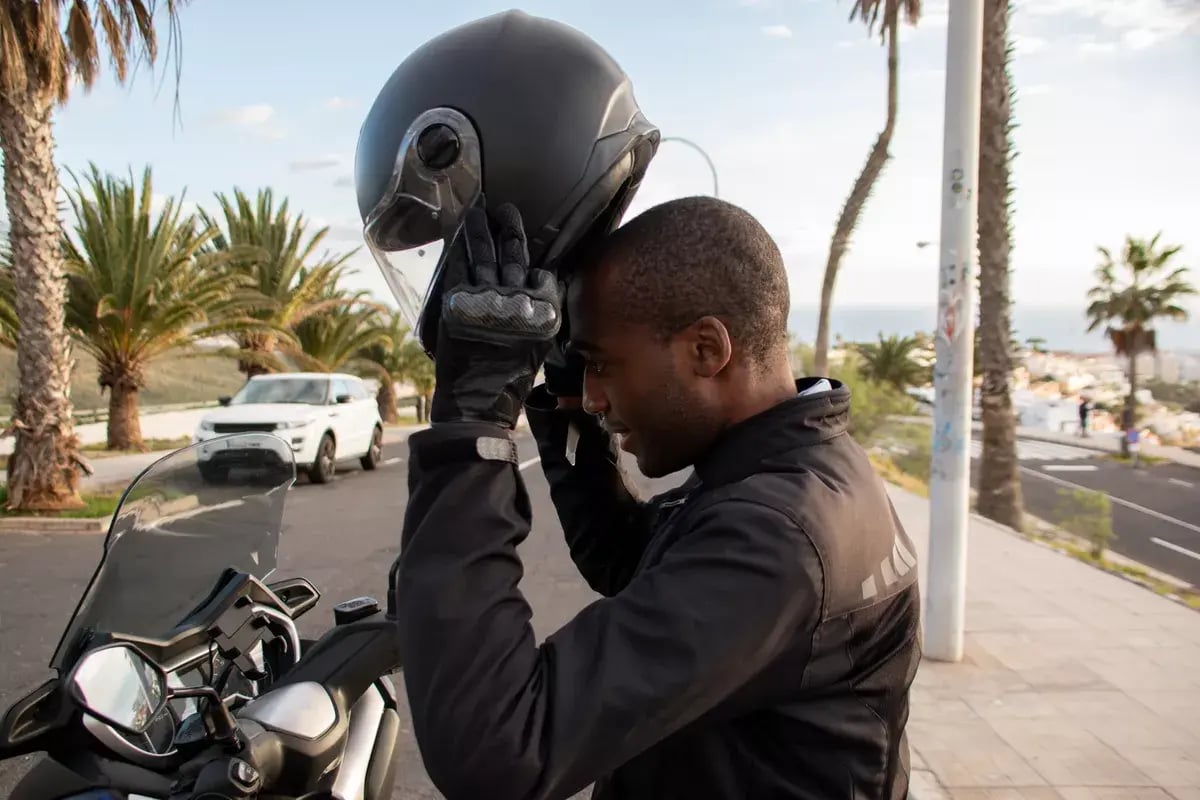
Bearded biker adjusting his helmet and gloves, preparing for a motorcycle ride in the city

Comfort is King: Features That Go the Distance

Comfort isn’t a luxury on long rides—it’s what keeps you sharp, focused, and ready for whatever the road throws your way. The right biker’s riding gear is designed to move with you, not against you, reducing fatigue so you can stay in the saddle longer without feeling it. Fit, flexibility, and breathability all play a role when the miles start adding up.

Conditions can shift fast, which is why versatility matters. Cold weather gear for motorcycle riding should insulate without restricting movement, keeping you warm through early starts and late finishes. On the flip side, hot weather motorcycle riding gear needs airflow and moisture control to keep you cool when the temperature climbs.

When your gear adapts to the ride, you don’t have to think about it—you just ride.

Built for the Long Haul: Durability and Material Matters

When you’re chasing miles day after day, durability becomes non-negotiable. The best motorcycle gear for long distance riding is built to handle more than just the occasional trip—it’s designed to endure constant use, shifting conditions, and the wear that comes with life on the road. This is where materials and construction separate the average from the road-ready.

Premium gear uses abrasion-resistant fabrics, reinforced impact zones, and stitching that won’t give out when the ride gets demanding. Leather delivers time-tested toughness and a classic feel, while modern textiles offer lightweight strength and all-weather performance. Both have their place, as long as they’re built with purpose.

At the end of the day, long-haul riders need gear they can trust without a second thought—because when your focus is on the road ahead, your gear should already be proven.

Pack Smart, Ride Far: Gear That Works with You

Long-distance riding is about how everything works together. The right gear setup should feel seamless, giving you easy access to what you need without slowing you down. From smart storage solutions like saddlebags and backpacks to gear designed with visibility and functionality in mind, every piece should earn its place on the ride.

When your setup is dialed in, you spend less time adjusting and more time riding. Weight is balanced, essentials are within reach, and nothing gets in the way of the miles ahead. That’s the difference between packing heavy and packing smart—it’s gear that works with you, not against you.

At Southside Harley-Davidson, we know the road doesn’t compromise—and neither should your gear. Whether you’re gearing up for your first long haul or upgrading your setup for the next one, our team is here to help you ride prepared and ride farther.

Learn more about our motorcycle helmets and general merchandise here.

FAQ: Long-Distance Motorcycle Riding Essentials

What is the 12 second rule for motorcycles?

The 12-second rule is a defensive riding strategy that encourages riders to scan at least 12 seconds ahead on the road. It helps you anticipate hazards early—whether it’s traffic changes, road conditions, or unexpected obstacles—giving you more time to react and ride safely.

What do you need for a long distance motorcycle trip?

At a minimum, you’ll want reliable riding essentials: a quality helmet, protective jacket, gloves, riding pants, and durable boots. Add in navigation, weather-appropriate layers, hydration, and storage like saddlebags. The goal is to have gear that keeps you protected, comfortable, and prepared for changing conditions.

How many miles can you comfortably ride a motorcycle in a day?

For most riders, 200–400 miles per day is a comfortable range, depending on experience, terrain, and weather. Seasoned riders may push farther, but comfort, fatigue, and focus should always guide your limits—not just distance goals.

How to prepare for a cross country motorcycle trip?

Preparation starts with your bike and your gear. Make sure your motorcycle is fully serviced, plan your route with flexible stops, and pack smart with layered clothing and essentials. Just as important—ride within your limits, stay alert, and give yourself time to enjoy the journey.

How Often Should You Replace Your Motorcycle Helmet? A Safety Guide

Posted by Dan Novit

May 19, 2026, 10:00:00 AM

Motorcycle rider standing in front of a bike holding a helmet

TL;DR: Wondering how often should you replace a motorcycle helmet? This guide breaks down the timelines, warning signs, and factors that impact your helmet’s performance so you can ride with confidence every time.

  • Most helmets should be replaced every 3–5 years due to material breakdown from use and exposure
  • Even without visible damage, sweat, UV rays, and wear can reduce protection over time
  • Key warning signs include loose padding, poor fit, cracks, or worn components
  • A motorcycle helmet after a crash should always be replaced—no exceptions
  • Choosing a new helmet means focusing on fit, safety certifications, and long-term comfort

When it comes to rider safety, few pieces of gear are as critical as your helmet. It’s your first line of defense every time you hit the road—but like anything built for protection, it doesn’t last forever. That’s why understanding how often you should replace a motorcycle helmet isn’t just a good idea—it’s essential for every rider who takes their safety seriously.

The truth is, the lifespan of a motorcycle helmet depends on more than just time. Factors like wear and tear, exposure to the elements, and even how often you ride all play a role in how well your helmet can protect you. What might look fine on the outside can be compromised where it counts most.

In this guide, we’ll break down the signs to watch for, the timelines to follow, and how to make sure your helmet is always ready for the ride ahead. Because when you’re rolling out, confidence starts with knowing your gear is up to the task.

Why Helmet Replacement Matters More Than You Think

Your helmet might look fine on the outside, but protection isn’t just about appearances—it’s about performance when it matters most. Knowing when to replace a motorcycle helmet can be the difference between gear that works and gear that fails when you need it. Over time, the materials inside your helmet—especially the impact-absorbing liner—begin to break down, reducing their ability to do their job.

That’s why understanding when to replace a motorcycle helmet goes beyond checking for cracks or visible damage. Everyday factors all take a toll, even if you’ve never been in a crash. And if your helmet has taken any kind of impact, replacement isn’t a question—it’s a must.

At the end of the day, your helmet is built for one purpose: protecting your ride. Making sure it’s up to the task is part of riding smart.

The Clock Is Ticking: Understanding Helmet Lifespan

When it comes to rider safety, time is just as important as impact. Many riders ask, do motorcycle helmets expire? The short answer is yes—every helmet has a built-in shelf life, whether it’s been through a crash or not. Understanding the lifespan of a motorcycle helmet is key to making sure your protection hasn’t quietly worn down over time.

Most manufacturers recommend replacing your helmet every 3 to 5 years, but that timeline can shift depending on how often you ride and how well the helmet is cared for. Exposure to sun, sweat, heat, and everyday wear slowly breaks down the materials designed to protect you.

Even if it still looks good on the outside, what matters is what’s happening beneath the surface—because when it’s time to rely on your helmet, there’s no room for guesswork.

Motorcycle helmet, motorcyclist's helmet hangs on a motorcycle

Signs It’s Time for a New Helmet

Your helmet doesn’t always fail with obvious warning signs—but if you know what to look for, the clues are there. Understanding when to replace a motorcycle helmet starts with paying attention to changes in fit, comfort, and condition. If the interior padding feels loose, compressed, or no longer holds your head securely, that’s a sign your helmet isn’t performing the way it should.

Visible damage matters too. Cracks in the shell, a worn-out chin strap, or a loose visor can all point to compromised protection. And when it comes to a motorcycle helmet after a crash, there’s no debate—replacement is non-negotiable. Even a minor impact can weaken the internal structure, reducing its ability to absorb future hits.

At the end of the day, your helmet should inspire confidence every time you put it on. If it doesn’t, it’s time for an upgrade.

What Affects Helmet Longevity?

Not all helmets age the same. The factors that impact longevity go far beyond the date you bought it, shaping how well it protects you over time. Regular exposure to sunlight, heat, sweat, and moisture can gradually break down the materials inside your helmet—especially the liner designed to absorb impact. Even how and where you store your helmet plays a role in how long it holds up.

Frequency matters too. The more you ride, the more your helmet is subjected to wear and tear from constant use, vibration, and the elements. Proper care can extend its life, but it won’t stop the natural breakdown that comes with time.

And when it comes to a motorcycle helmet after a crash, longevity is no longer part of the conversation. Any impact can compromise its structure, making replacement the only safe move. Because in the end, protection should never be left to chance.

Ride Protected: Choosing Your Next Helmet

Choosing your next helmet should be about upgrading your ride with protection you can trust every mile ahead. The right helmet should deliver a precise fit, dependable certification, and the kind of comfort that keeps you focused from the first mile to the last. When everything comes together, it’s not something you think about—it’s something you rely on.

Today’s helmets are built with advanced materials, improved ventilation, and rider-first design, giving you more confidence every time you roll out. Whether you’re chasing long-distance miles or dialing in your daily ride, the right choice makes all the difference.

At Southside Harley-Davidson, we’re here to help you find a helmet that matches your ride and your standards. Learn more about our motorcycle helmets and general merchandise here.

FAQ: Motorcycle Helmet Replacement & Safety

Do you really need to replace a motorcycle helmet every 5 years?

In most cases, yes. The common guideline is every 3–5 years, depending on use and care. Over time, the materials inside your helmet break down from sweat, UV exposure, and regular wear, even if there’s no visible damage.

Is a 10 year old motorcycle helmet safe?

A 10-year-old helmet is generally considered unsafe. Even if it looks intact, the protective liner and materials have likely degraded beyond their ability to provide reliable impact protection.

What is the 5 year helmet rule?

The 5-year rule refers to the widely accepted recommendation that motorcycle helmets should be replaced every five years from the date of first use. It’s a benchmark to ensure your gear is still performing at its best.

How to tell if a motorcycle helmet is expired?

Look for signs like loose or worn interior padding, cracks in the shell, a compromised chin strap, or a poor fit. You can also check the manufacturer’s date label inside the helmet to track its age.

Comments